


 Some good news about the City’s approach to weed management.
For those following the push to reduce chemical weed control, here’s the update on my post from last month. Council made several positive decisions at its 22 September meeting.
 More non-chemical weed control
Council unanimously supported a five-year approach targeting a 25–50% reduction in glyphosate and other pesticides within parks and streetscapes.
 Bringing steam weed control in-house
The supported approach includes bringing steam and hot-water weed control for the CBD, play spaces, and areas within 50 metres of schools in-house. City equipment and trained staff would provide greater flexibility and reduce reliance on contractors, who would continue to cover other locations.
 No new Schedule 5 chemicals voted through
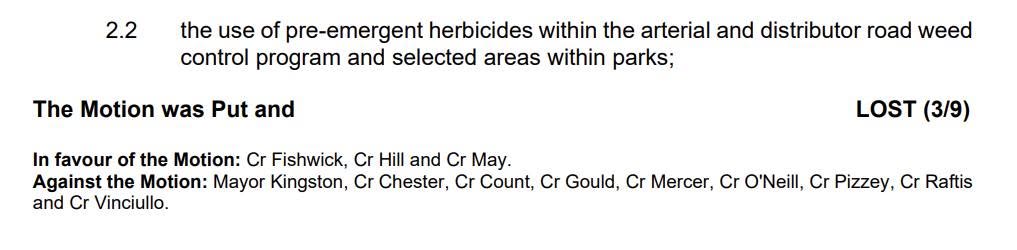
The proposed use of pre-emergent herbicides on arterial and distributor roads, and in selected park areas, was voted down, nine votes to three.
 There Less paperwork for residents
With 9/3 support, Council also agreed to keep residents on the Pesticide Exclusion and Pesticide Use Notification registers for three years without annual re-registration, along with sending renewal reminders.
It will also investigate allowing residents to receive spraying notifications for more than five parks or reserves.
 Better accountability
Annual glyphosate use by both the City and its contractors is to be included in the State of the Environment Report. Council also requested measures to track non-chemical treatment coverage, maintenance standards, and pesticide use, with progress reported throughout the five-year period.
 Funding for our volunteer Friends Groups
 This will be reviewed at the mid-year budget review, with the aim of providing a CPI adjustment.
 And it’s all thanks to you!
This all follows the community’s call for reduced pesticide use at the March 2024 Electors’ Meeting and Council’s subsequent request for a feasibility report.
There is still implementation ahead, but these are positive steps towards reducing reliance on herbicides, making the registers easier to use, and giving residents a clearer view of progress.